Against a lab scan
Camera scan vs lab scan: six negatives, scanned both ways.
Each negative here went through a Fuji Frontier SP‑3000 in a lab, and in front of a camera on a copy stand — three narrowband RGB exposures, developed in Trichroma Lab.
Camera scanning — DSLR scanning, as most people call it, whatever the camera — is how most people digitise film at home, and colour is what it is judged on. So this is a comparison on colour: Frontier scans beside camera scans of six negatives — six emulsions, six different rolls, each pair the same frame with the same crop and the same compression.


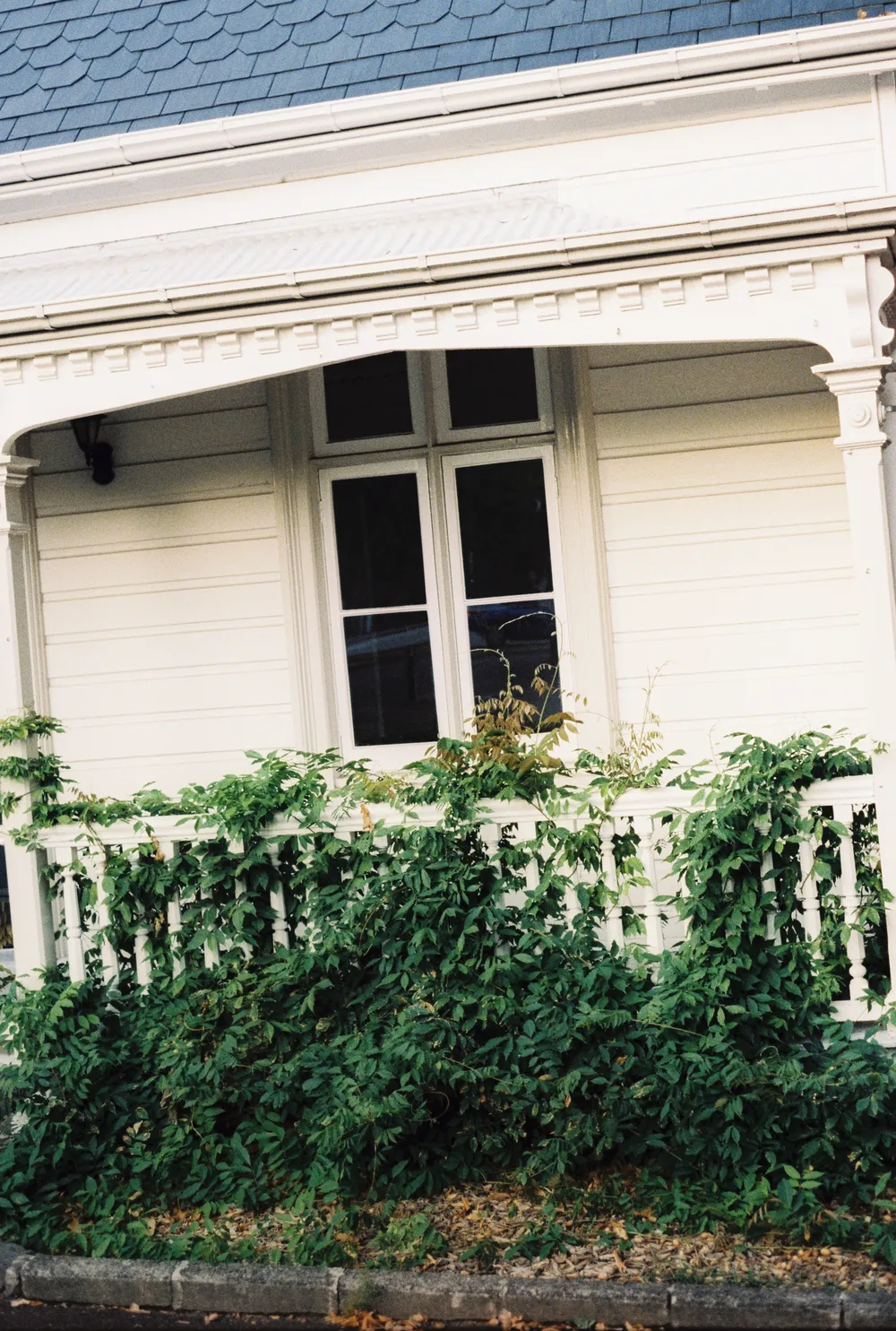
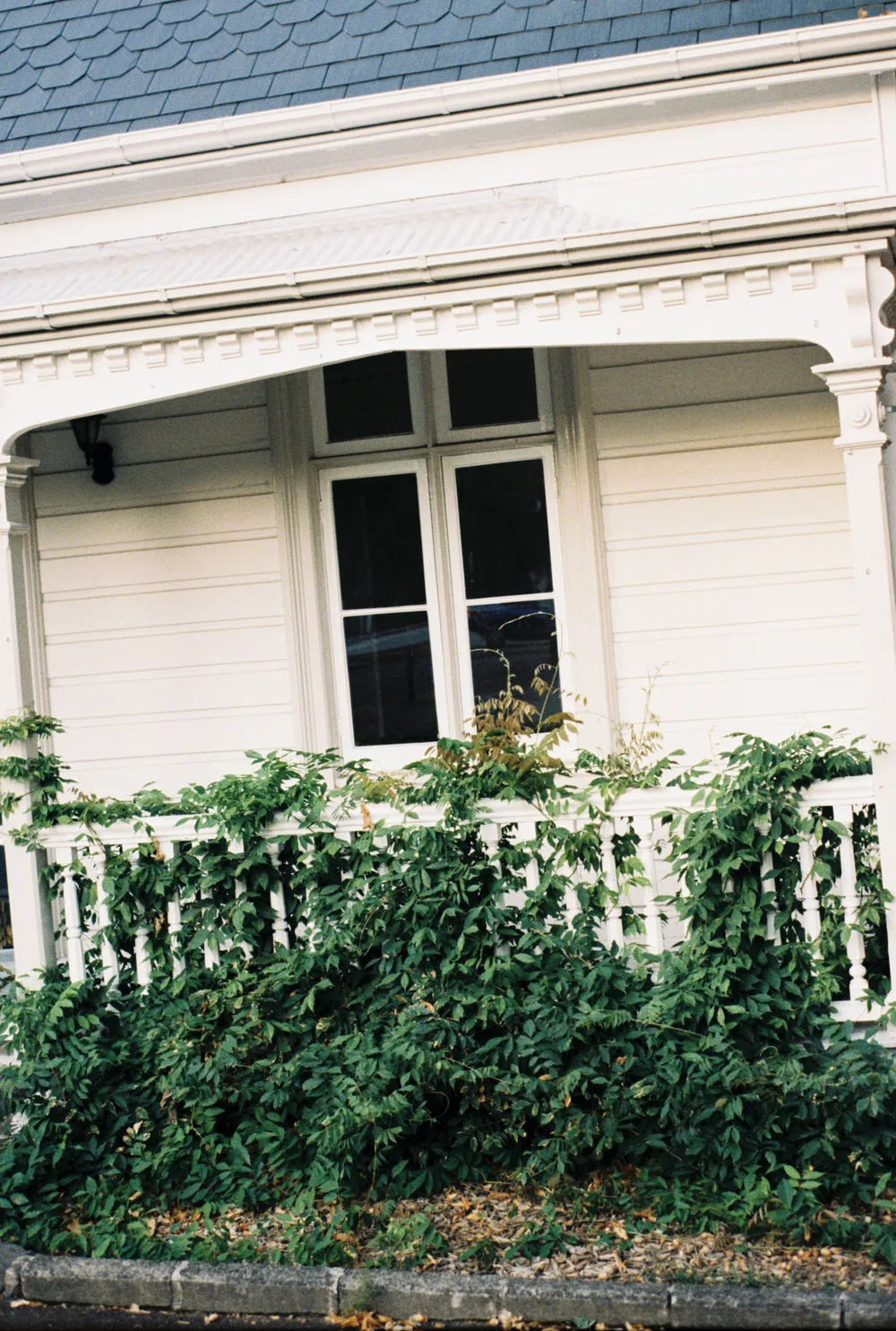


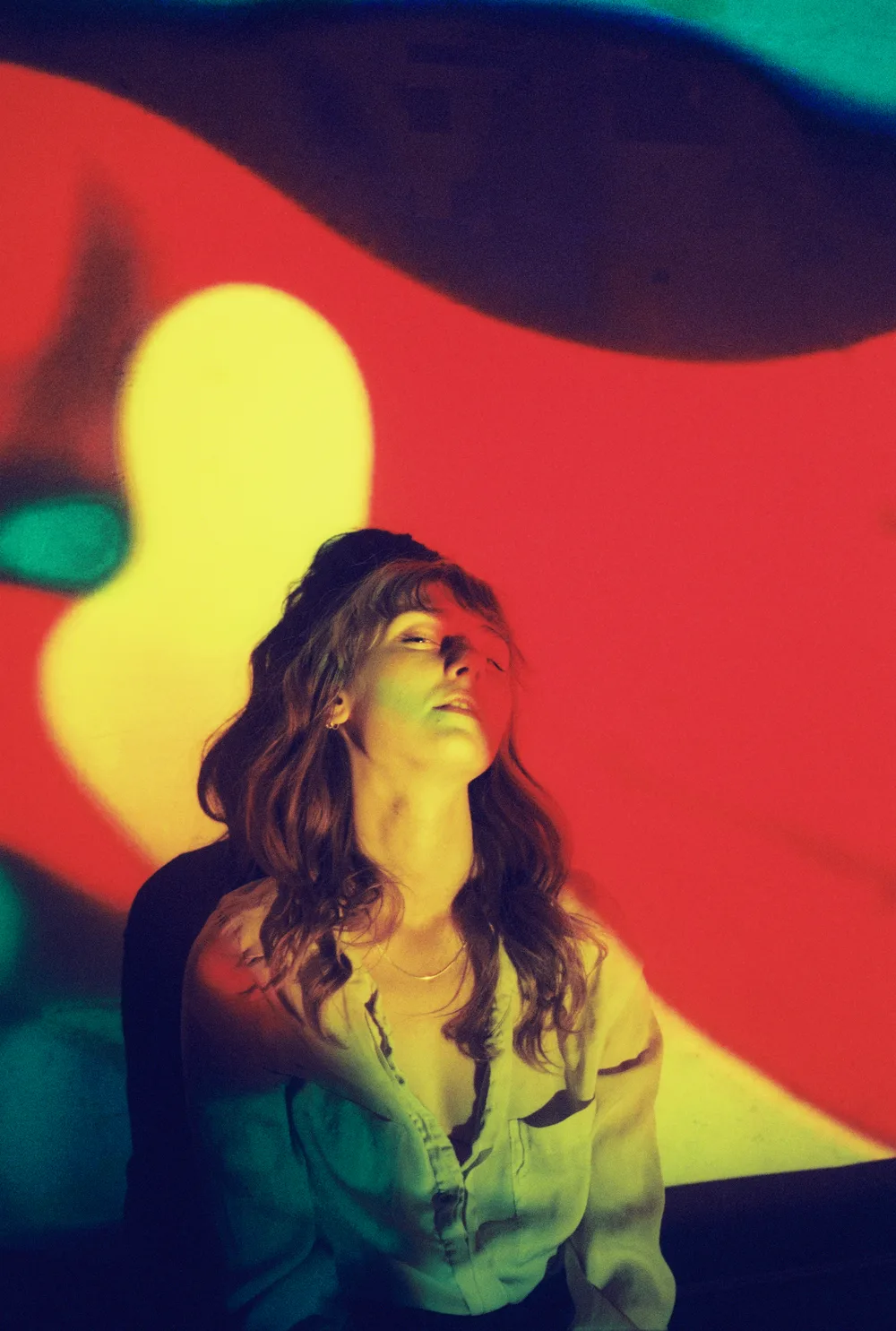
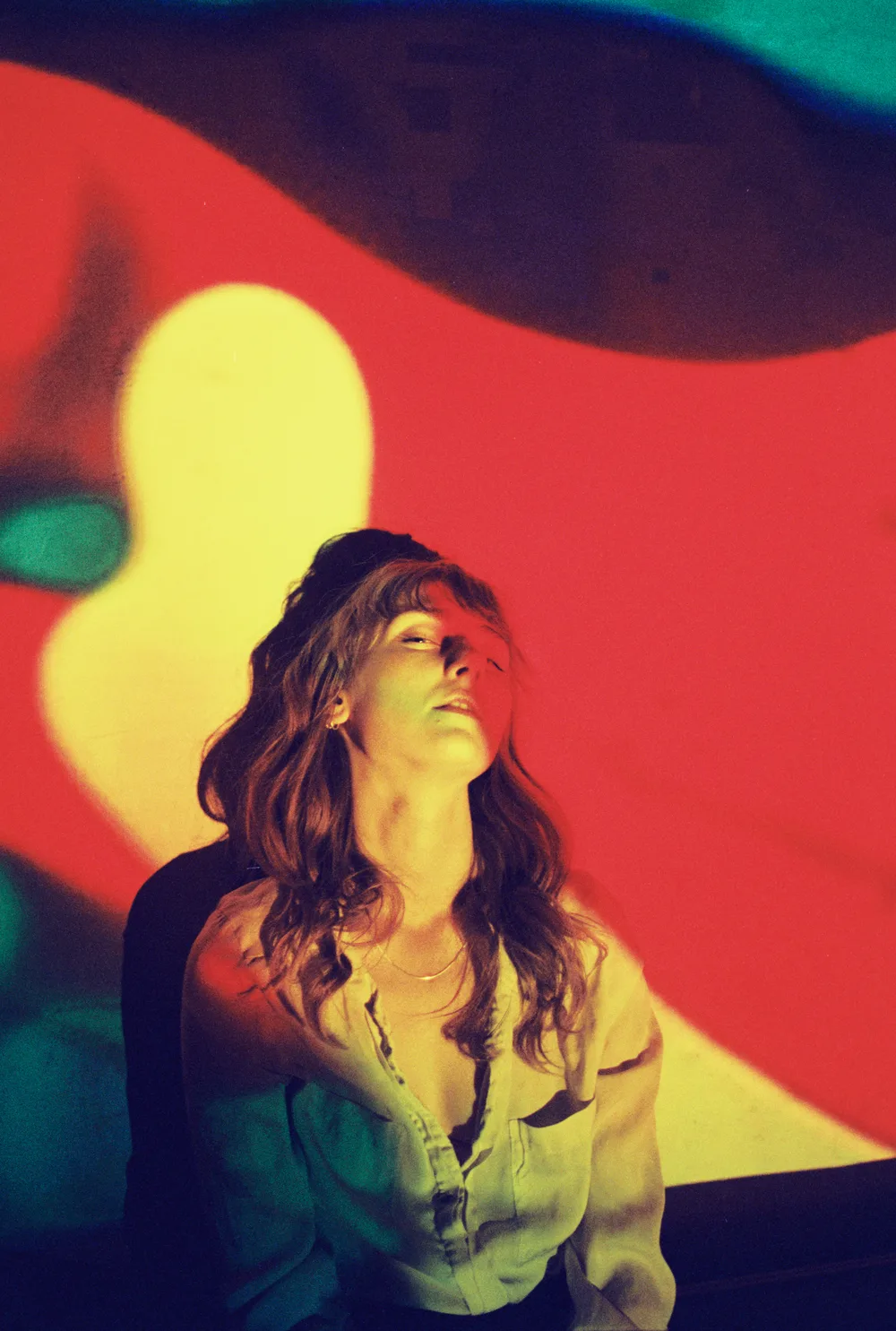
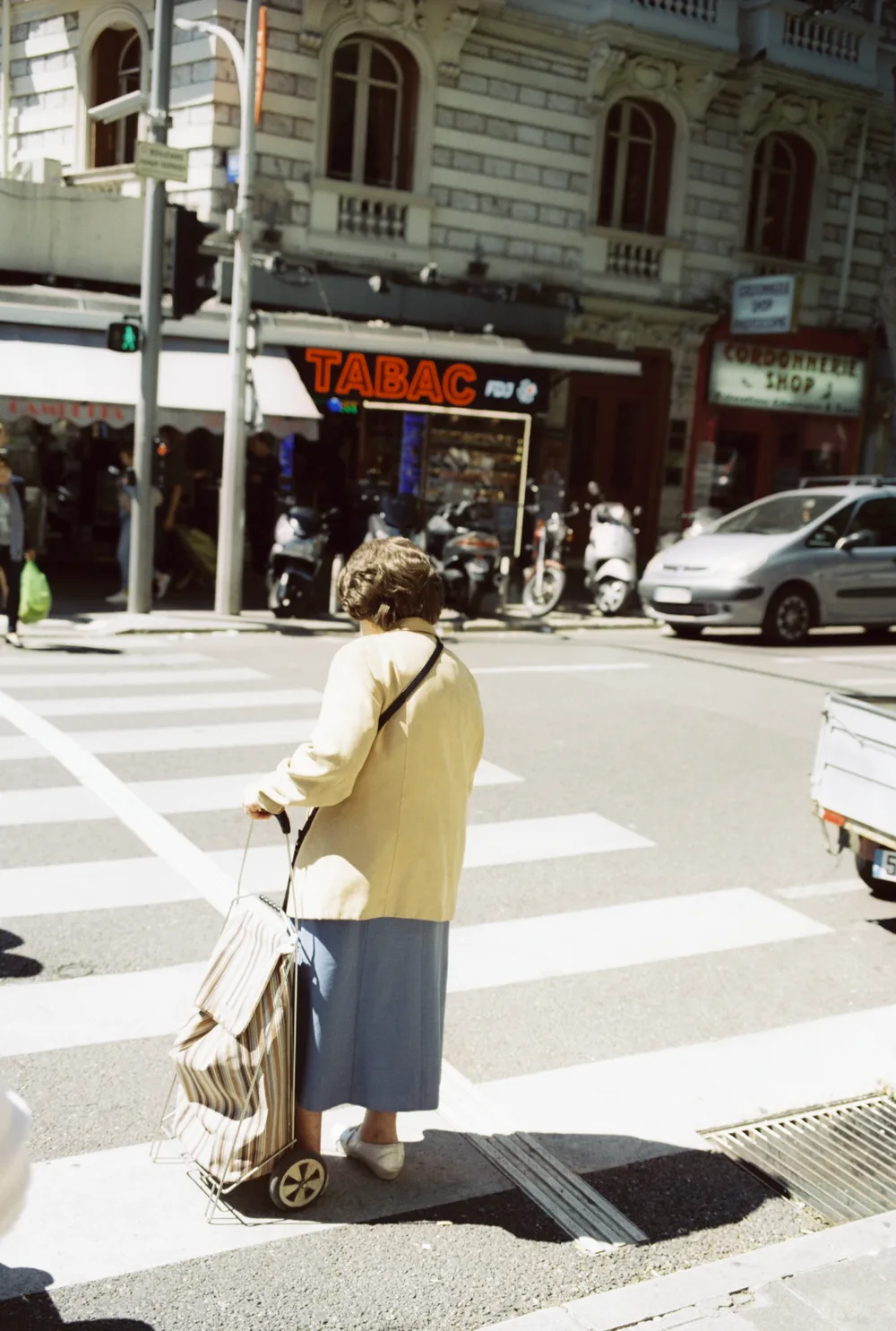
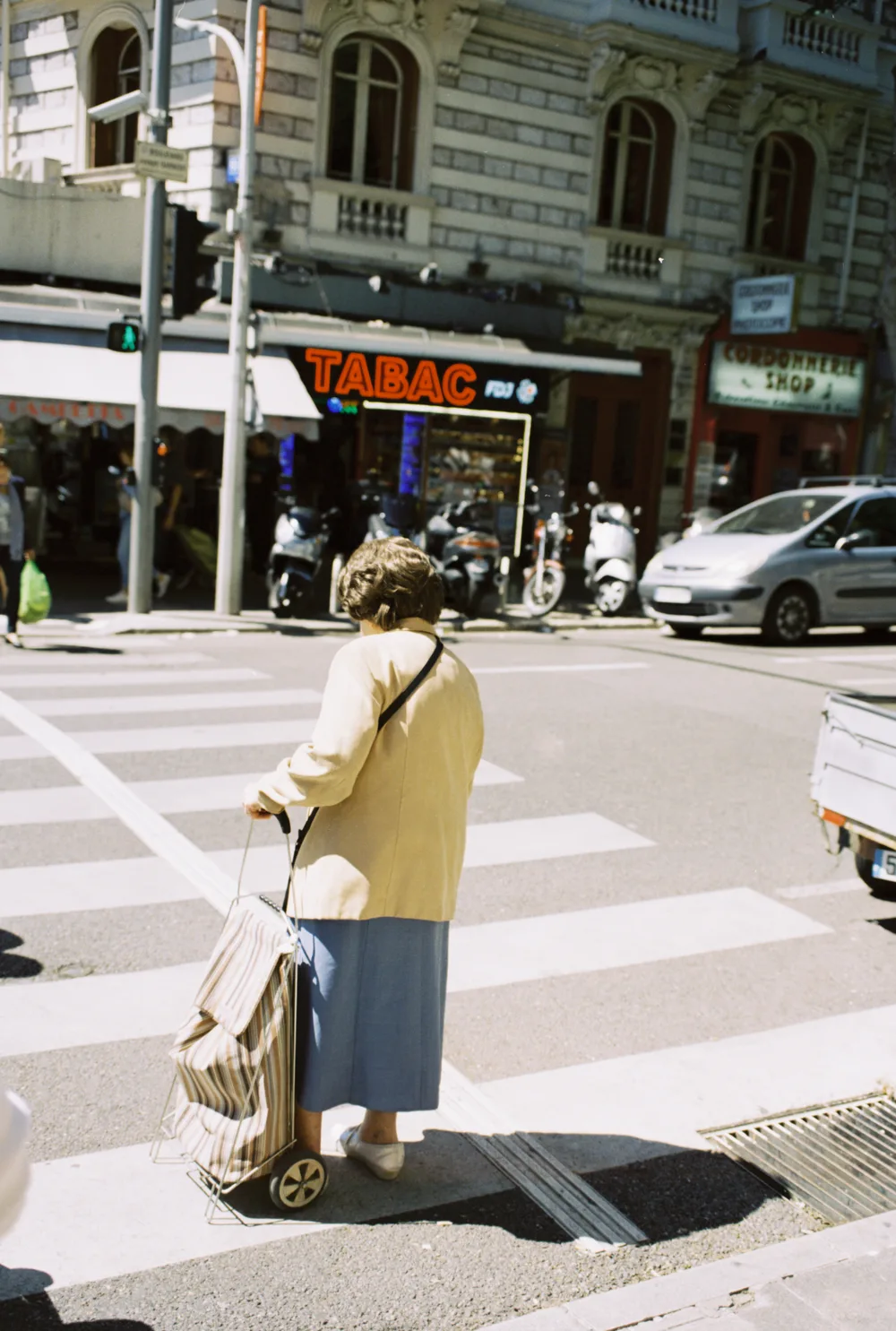
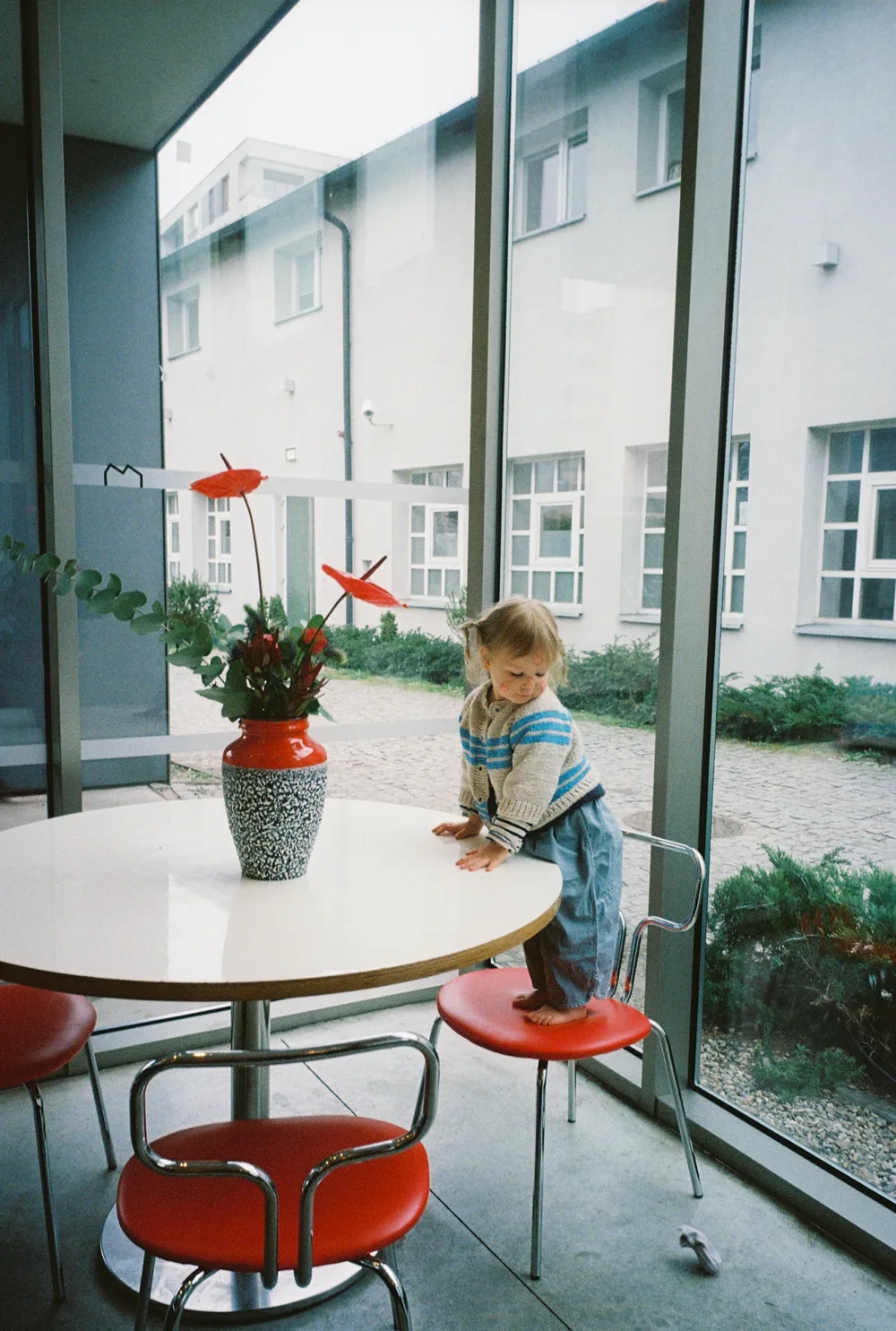
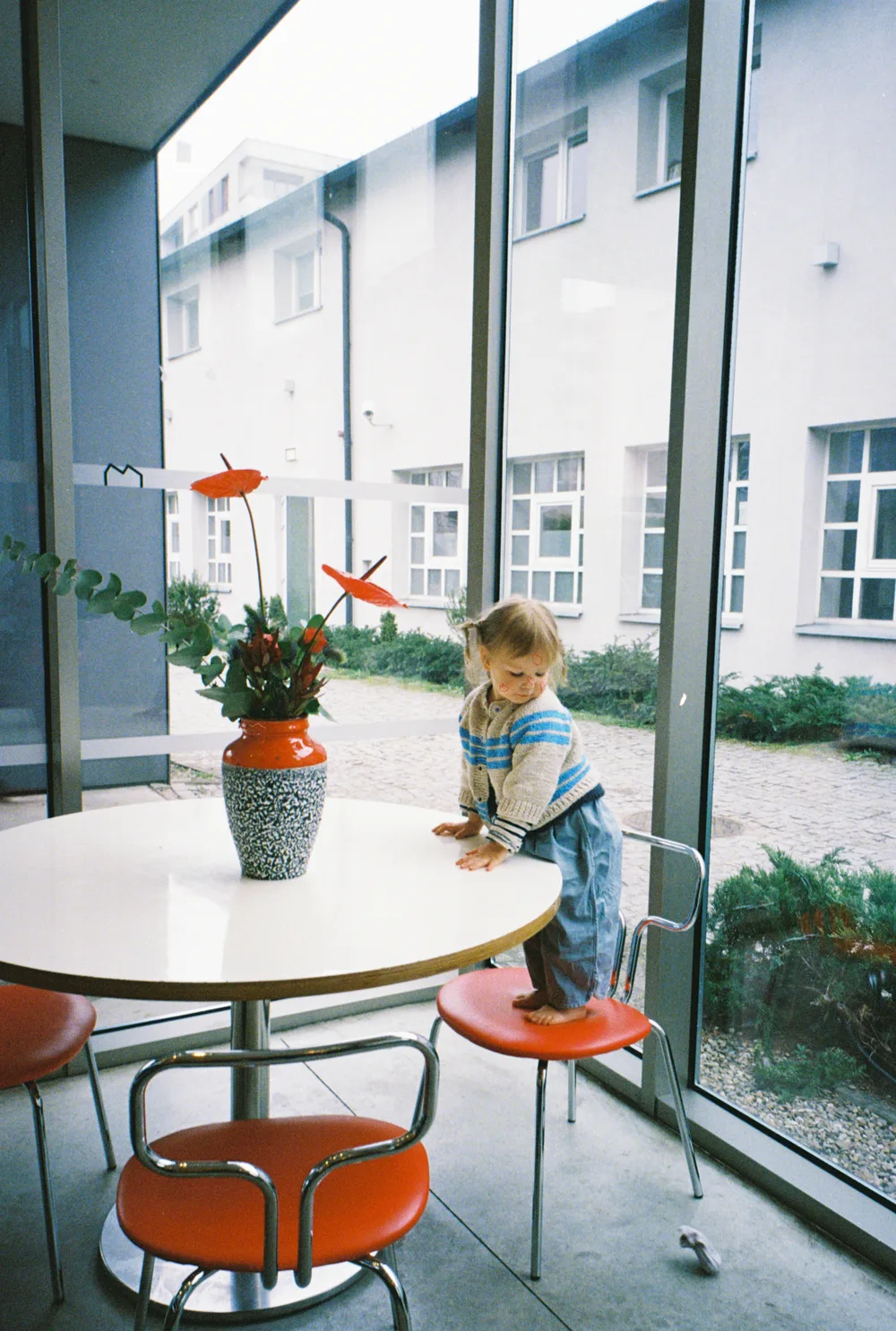
The pairs were made between late August and late September 2026, and are not re-rendered with every release. Six frames; not a claim about every roll ever shot.
How each pair was made
The lab half is the Frontier's own file. Where the scanner wrote its flat bar along one edge, that is trimmed off; then the file is laid onto the camera frame's grid so the two line up, and cropped.
The camera half is three exposures of the same negative, one under each narrow band — 665, 525 and 455 nm, on a Scanlight — merged and developed in Trichroma Lab at full resolution.
Then the two are matched by the pixels rather than by eye: the scan is registered onto the render, both are cut to one window with the rebate left off on both sides — a border on one side alone is a tell, and a light surround shifts how you read the colour inside it — and both are written at the same size and the same quality.
Why a camera scan usually does not look like a lab scan
Most camera scans are one exposure on a white light table. The sensor then measures the negative through its own red, green and blue filters, which are wide and overlap, so each channel carries some of the other two dyes; the orange mask has to be guessed away afterwards, and a converter that guesses per frame can put two frames of one roll in different places.
A lab scanner reads the film through narrow bands of light instead, and runs every frame of a roll through the same pipeline. That is the difference these pairs are about — how trichromatic (narrowband RGB) scanning works goes through it step by step.
What it takes at home
A camera on a copy stand, a narrowband RGB lamp, and three exposures of every negative plus three of the empty gate once per session; Trichroma Lab works out which three belong together, lines them up and reads the film base off your own rebate on every roll. A white light table works too, at one exposure per frame, and costs about five counts a channel over a roll against the three bands. How to scan colour negatives with a camera covers the bench step by step.
Every frame on this page was shot on one station. Bands at other wavelengths, or the same lamp on a different camera, change the measurement itself, so the colour will not land exactly where these frames landed until that rig is measured — tell me about yours and we measure it together.