Kodak UltraMax 400
Kodak UltraMax 400 in Trichroma Lab: a negative beside a Fuji Frontier SP‑3000's own scan of it.
Below them, the film's base as the app measures it, and what the app does with that number.
Kodak UltraMax 400 on a Frontier SP‑3000, and from a camera
The same negative twice: the lab's own scan, and three narrowband exposures developed in Trichroma Lab, cut to one frame with the same crop and the same compression. All six pairs, and how each was made.
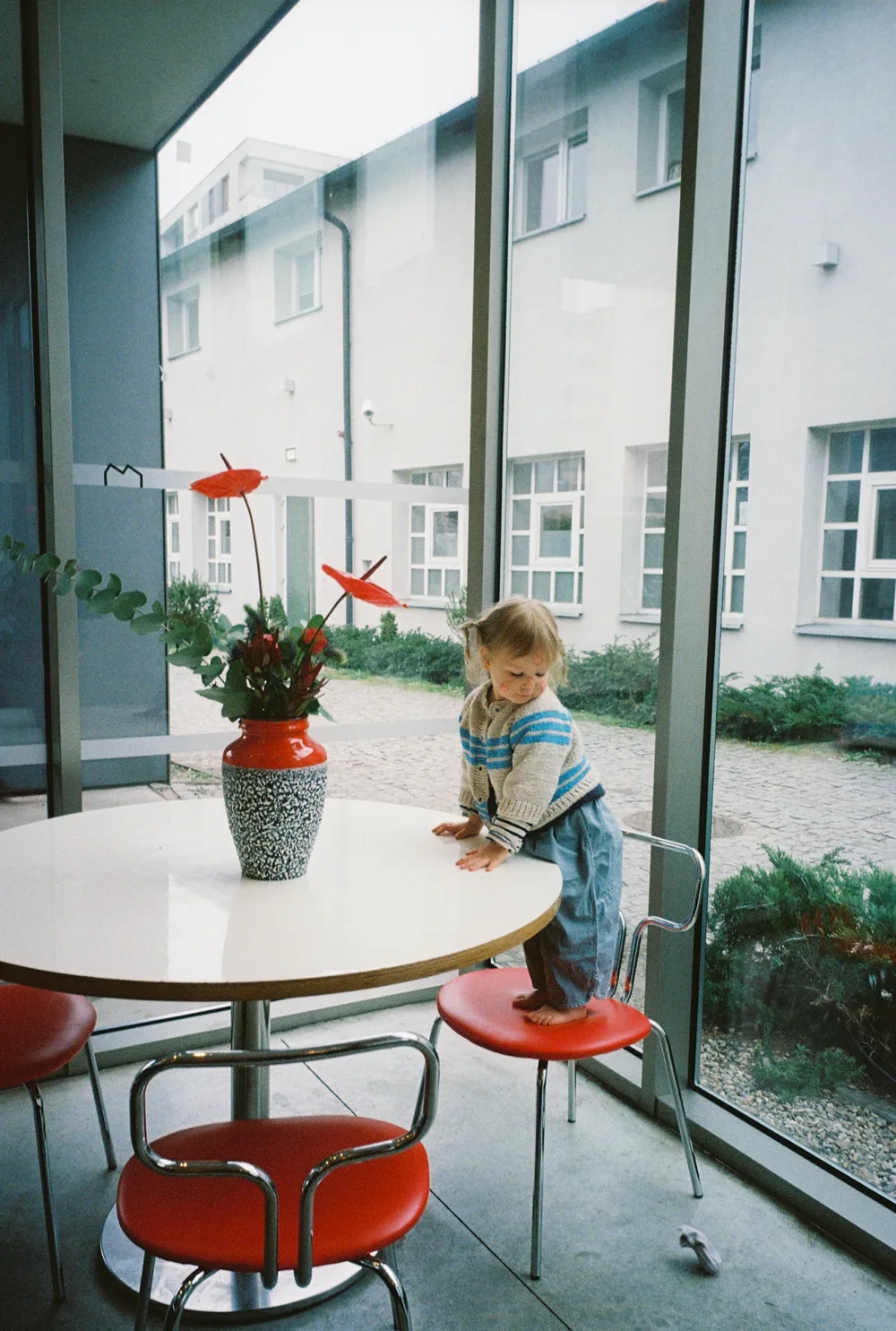
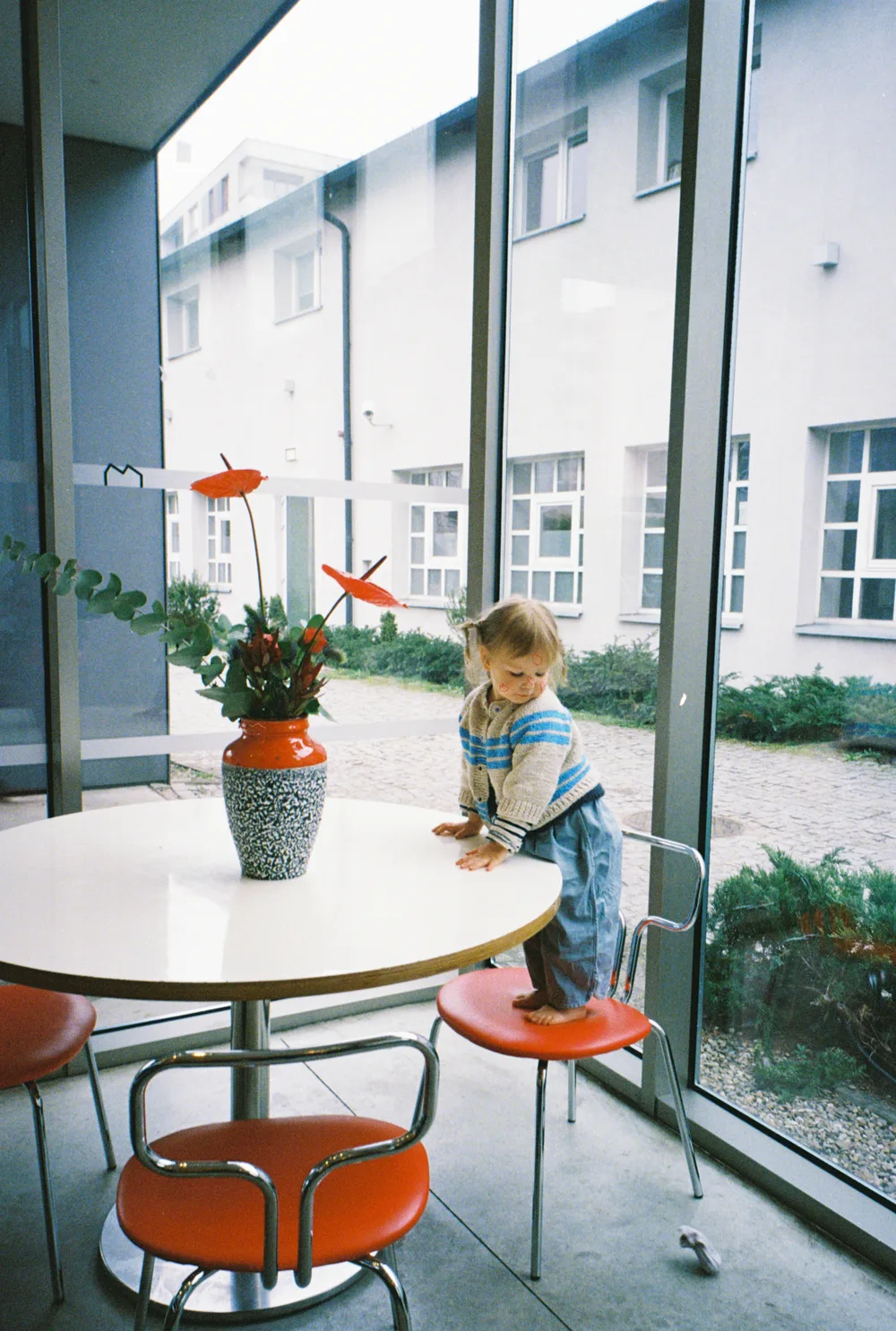
Narrowband RGB · 665 · 525 · 455 nm
Made between late August and late September 2026, and not re-rendered with every release.
The film base, measured
The bare, unexposed film around each frame — the clear rebate — measured in density on the station Trichroma Lab is calibrated on: under narrowband light at 665, 525 and 455 nm, and under white light through a Fujifilm GFX100S. The light let through is the same reading put the other way round: ten to the minus density.
| Red | Green | Blue | |
|---|---|---|---|
| Narrowband, density | 0.54 D | 0.86 D | 1.15 D |
| Narrowband, light let through | 29 % | 14 % | 7 % |
| White light, density | 0.48 D | 0.78 D | 1.03 D |
| Other rolls sat up to | 0.010 D | 0.005 D | 0.005 D |
Read these as this station's numbers rather than the film's in general: another camera or lamp measures another base for the same film, and two rolls of one stock, developed apart, read apart too — which is why the app grades your roll on its own base wherever it can read it.
What Trichroma Lab does with it
Under three narrow bands, with a flat, it never asks which film you shot: your roll's own base is read off its rebate. This entry comes in when the film is named — under white light, where you always name it, and on a roll whose own base could not be read. It is listed as “Kodak UltraMax 400”, and under white light your roll's own base tunes it to your development batch. Narrowband or white light · how trichromatic scanning works.